
Washing a House Before Painting: Soft Wash, Pressure, Drying Time and What Gets Removed
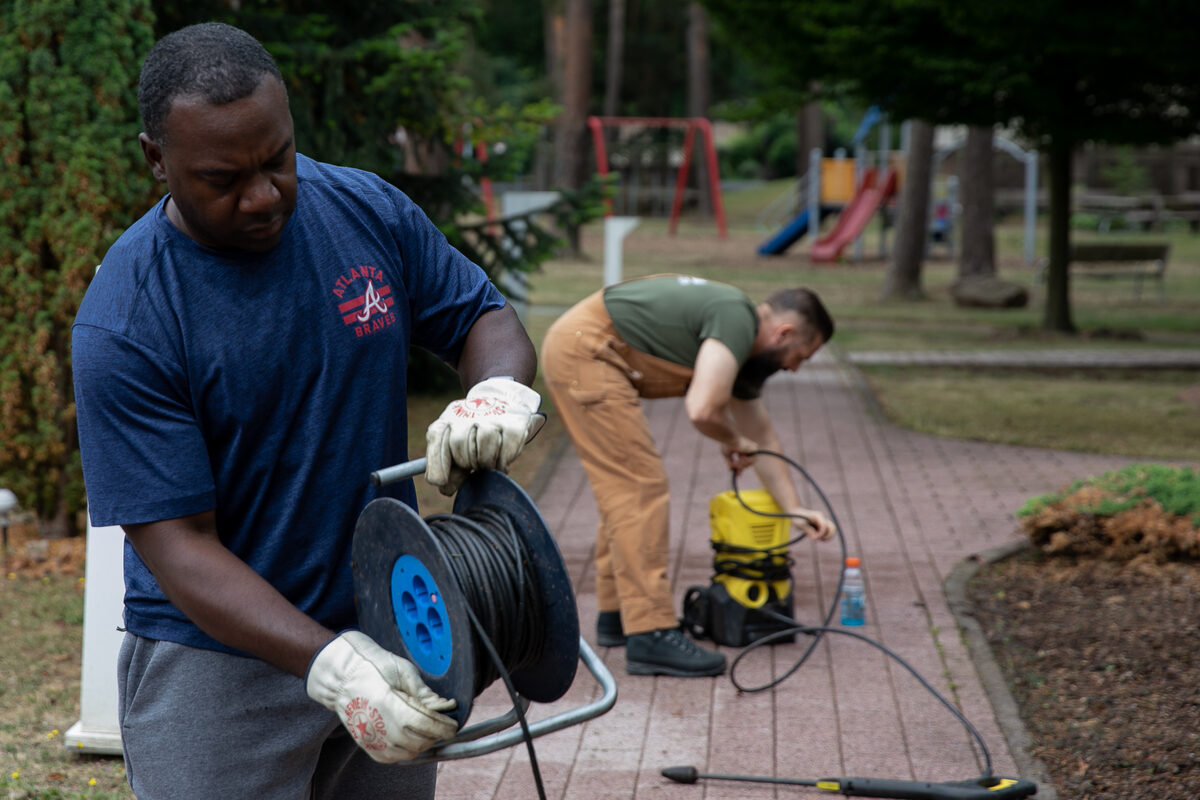
Washing is step one of every exterior paint job because paint bonds to whatever is on the surface. If that is pollen, chalk, mildew or red clay dust, the new paint grips the dirt and peels with it.
What Has to Come Off
- Pine pollen from March and April
- Chalk from sun-worn paint
- Mildew and algae on shaded walls and soffits
- Red clay splash on the lowest course of siding
- Spider webs, wasp nests and dirt under eaves and porch ceilings
Soft Washing vs Pressure Washing
Soft washing uses a cleaning solution at low pressure, gives it time to work, then rinses. It is the right method for siding, trim and soffits. High-pressure washing is for concrete and masonry flatwork; on siding it can crack vinyl, gouge wood, etch fiber cement and drive water behind the boards and around windows.
Drying Time
After washing, siding should dry before primer or paint: often 24 to 48 hours in good weather, longer for bare wood, shaded walls, or after a humid stretch. Painting damp wood traps moisture and leads to blistering and peeling.
On Older Homes
On houses built before 1978, washing loose paint can spread chips. Lead-safe practices call for collecting debris on plastic and avoiding methods that blast paint off.
Frequently Asked Questions
Can I paint the same day I wash?
Usually not. Give the siding at least a day to dry, more in humid weather.
Do I need to wash a house that looks clean?
Yes. Pollen and chalk are often invisible until you rub the surface.
Will washing remove peeling paint?
Some loose paint comes off, but scraping is still needed. Do not use high pressure to strip paint.
Does washing alone help paint last?
Yes. A yearly wash removes mildew and dirt that shorten paint life.
Washing Is in Every Scope
Our exterior quotes include the wash and drying time. See house washing or contact us.