
Painting in Humidity and Summer Heat: Drying Time, Dew, Direct Sun and Recoat Waits
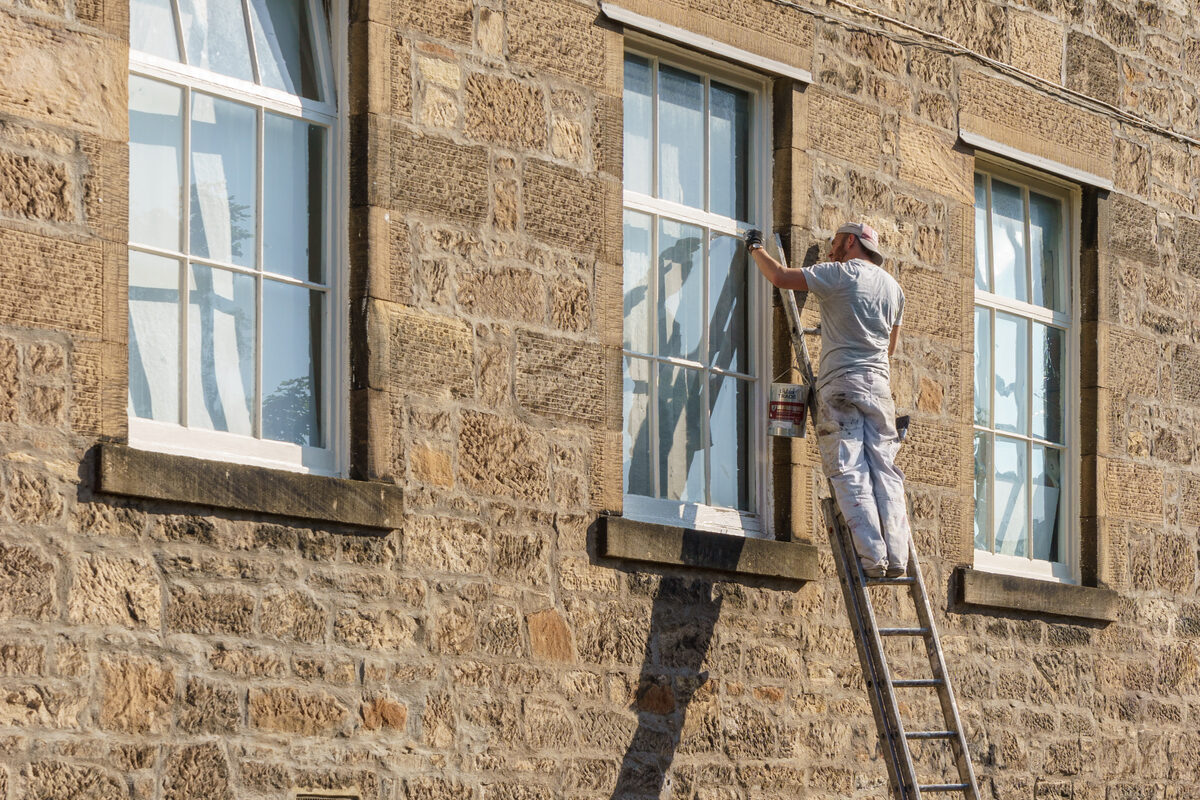
Charlotte summers are hot and humid, with July highs averaging about 90°F (NOAA 1991-2020 normals). Both heat and humidity change how paint behaves, and summer jobs succeed by working with the timing rather than against it.
Humidity
Water-based paint dries by evaporation. In humid air, drying slows, and paint stays soft longer. If dew forms on paint that has not set, it can leave streaks or a sticky, discolored residue, sometimes called surfactant leaching, especially on darker colors. Washing it off after the paint dries usually fixes it.
What painters do: stop exterior work early enough in the afternoon for paint to set before evening dew, and wait longer between coats on humid days.
Heat and Direct Sun
Painting a surface in direct sun on a hot day makes the top of the paint dry too fast. That can cause lap marks, brush marks, poor flow and blistering. Dark surfaces in the sun get much hotter than the air.
What painters do: start early, paint each side of the house when it is in shade, and follow the sun around.
Indoors
Humidity slows drying inside too. Running the air conditioning, which also removes moisture, and good ventilation help. Bathrooms and kitchens should not be used for showers or cooking steam until fresh paint has dried.
Frequently Asked Questions
Can you paint when it is humid?
Yes, within the label's limits, with more drying time.
What causes sticky streaks on new paint?
Usually surfactant leaching from humidity or dew on fresh paint; it can be washed off once dry.
Is it too hot to paint at 90 degrees?
Air temperature is only part of it; the surface temperature and direct sun matter more. Painting in shade is the fix.
Do painters work in summer?
Yes, with early starts and careful scheduling.
Summer Jobs Done Right
We schedule summer painting around shade and dew. See exterior painting or contact us.